When it comes to health coverage, dental insurance is often one of the most overlooked pieces of the puzzle. But in 2026, dental plans continue to stand out as one of the most affordable, high-value insurance benefits you can add — whether you’re an individual, a family, or a small business employer.
Here’s why dental insurance remains a smart (and surprisingly cost-effective) choice this year.
⸻
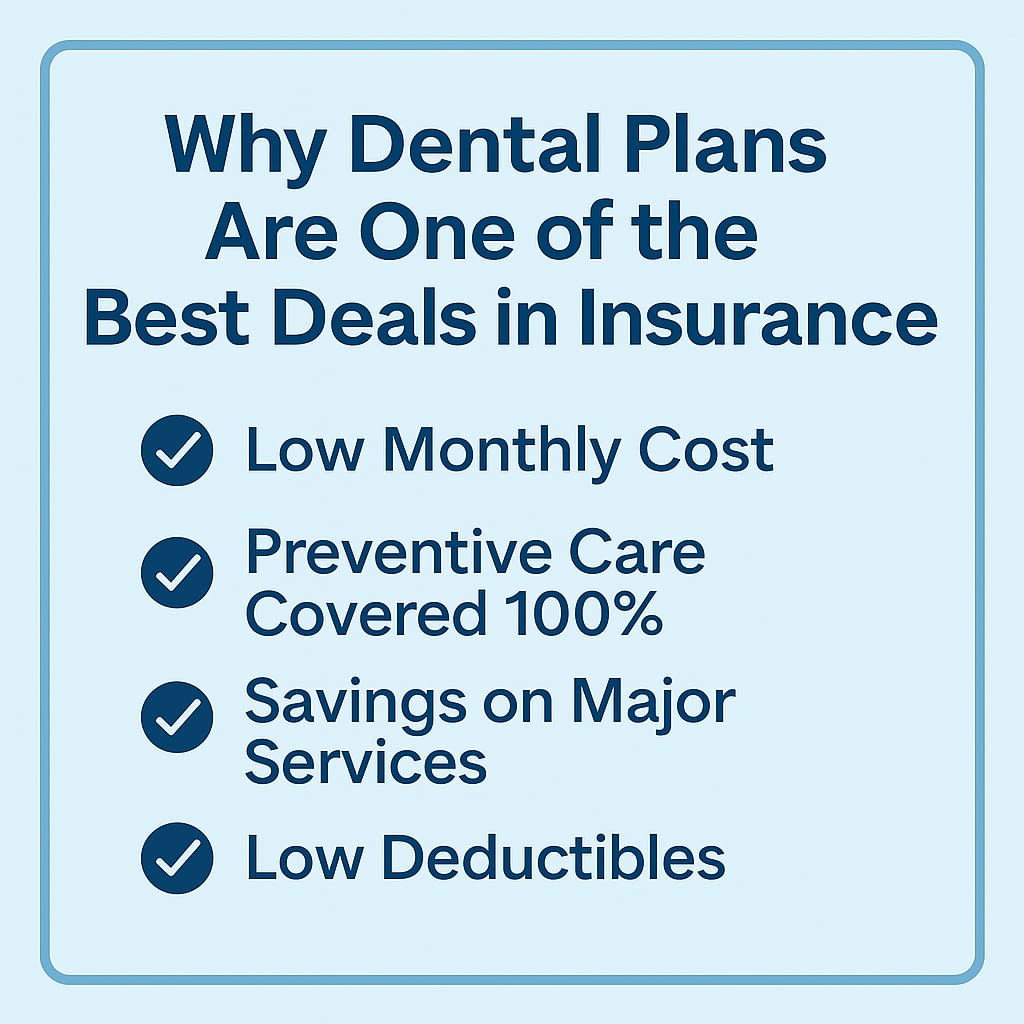
1. Low Monthly Premiums Compared to Other Coverage
Dental insurance is one of the least expensive health-related benefits available.
Even with rising healthcare costs, most dental plans in 2026 start as low as $20–$45 per month for individuals and remain budget-friendly for families.
For small businesses, group dental plans often offer even better pricing with minimal employer contribution requirements.
⸻
2. High Value for Preventive Care
Preventive dental care isn’t just about clean teeth — it affects your overall health.
Most dental plans cover 100% of preventive services, including:
• Cleanings
• X-rays
• Routine exams
• Fluoride treatments (for some age groups)
Two cleanings a year alone can easily exceed the cost of an annual premium, making dental coverage one of the best “dollar-for-dollar” insurance values.
⸻
3. Predictable Costs for Bigger Procedures
Without insurance, common dental procedures can be expensive:
• Fillings
• Crowns
• Root canals
• Extractions
• Dentures
• Implants (partial coverage depending on plan)
Dental plans typically include tiered cost-sharing, helping make large procedures far more manageable.
Most plans follow a structure such as:
• Preventive: 100% covered
• Basic: 50–80% covered
• Major: 20–50% covered
This makes it much easier to budget for dental work throughout the year.
⸻
4. Low Deductibles (or None at All)
Unlike medical insurance, where deductibles can reach thousands, dental deductibles are usually:
• $50–$100 per person, or
• $150–$200 per family, or
• No deductible at all for preventive services
This means you feel the value of your plan almost immediately.
⸻
5. Keeping Small Problems From Becoming Big (and Costly)
Regular cleanings and X-rays catch problems early — long before they become emergencies.
Dental coverage helps prevent:
• Cracked or infected teeth
• Gum disease
• Costly crowns and root canals
• Tooth loss
Avoiding just one major procedure can save you hundreds or even thousands without insurance.
⸻
6. Excellent Add-On for Employers Offering Benefit Packages
For small businesses, dental insurance offers:
• High perceived employee value
• Strong recruitment & retention benefits
• Very low relative cost
• Optional employer contributions
In many cases, employers can offer dental as a voluntary benefit, meaning employees pay the premium but still receive lower group rates.
⸻
7. Smile Benefits = Health Benefits
Oral health is linked to:
• Heart disease
• Diabetes
• Respiratory illness
• Pregnancy complications
• Inflammation-related conditions
When dental problems go untreated, overall health costs tend to rise. Dental coverage encourages regular visits — which leads to better long-term health outcomes.
⸻
The Bottom Line
Dental insurance continues to be one of the most affordable and cost-effective benefits available in 2026. Low premiums, high preventive value, and predictable coverage for bigger procedures make it a great addition for individuals, families, and employers alike.
Whether you’re reviewing your benefits for the new year or looking to add more value to your employee package, dental coverage is an easy, budget-friendly win.

